Monday, January 28, 2013

"After Fire, Chicago Warehouse Covered in Ice"

Bridgeport's warehouse fire..on Jan 24

...Somebody.saved these Tribune pictures for me..
(although these were flash-site pictures..which I couldn't save.. some unknown person on the web forum cooperated me to save them..)  thnx!


(...the ice palace has rekindled in the next morning) http://abclocal.go.com/wls/story?section=news/local&id=8968477 CFD determines warehouse fire was set?.. "This ice palace, which used to be a warehouse..was once owned by Pullman Couch Company" said the abc7 reporter. - It has been vacant, but its ex-owner and ex-ex-owner are currently, "both in prison" for the bribery..(!) (...37th and Ashland is not far from the house of the former Mayor Richard Daley Senior..) "It was Chicago's central manufacturing district," the black guy said.

Sunday, January 27, 2013

Bridgeport. on Dec 19.

I wanted to visit this neighborhood.. ( there is a small public library named "Rechard Daley Branch"
-  I asked the librarian girl about if there is any particular place to visit, but.. she said "No, I don't think there is anything around here ..Just sit for a cup of hot coffee somewhere.." )
     
The culprit..it's "Bedding Expert" in Bridgeport! (..whose tv commercial
 frequently interrupted me, as a browser ad for long time..
... even while I was at home in Japan..)


Found the old house of the Mayor Richard Daley Senior anyway..
at least an atmosphere was found ...maybe a lot of his henchmen
 visited their big boss here..over the years!..

Somewhat weird light leaking from the old mayor's house?..

The fire department in Bridgeport almost in front of Daley house

Winter is coming..
I like the gorgeous caps.

(So.. the old mayor was obsessed by the idea of protecting this Irish neighborhood.?.)

*I couldn't find "Daley the last boss" video on youtube,.
 (But these are the videos which suggest how  2nd R. Daley & current Mayor Emanuel..  Obama are related..)

https://www.youtube.com/watch?v=8YTZXglaAMU
Mayor Daley documentary video
 https://www.youtube.com/watch?v=JCvh2rxXrbE&feature=endscreen&NR=1
Mayor Richard Daley need you to volunteer..


Friday, January 25, 2013

There really is North Side Japanese American community

I met the enigmatic community of...'North Side Japanese Americans'!

 In the photo below,

MK san (left, an Issei) and MY san (a Nisei).. whom I talked with at the big  senior residence - a .Japanese-founded, HUD aided residence on the North Side..

 It was wonderful encounter - although other people were saying.., there are no more old Issei people surviving.. it wasn't true.
  You can still meet ..some, wholesomely living senior people even in our neighborhood..
Although they are few, they are some Issei ..the  pre-War 1st generation people...who were the war-time Internment Camp evacuees.. surviving in this area! ...e.g. MK san is 96 years old..and she said, her husband is becoming 100 years old!.. later I sent him the flower for his birthday..

MK san on the left.. who talks with her quick humor


They came from California in 1940s and lived in Andersonville- MK san said her husband used to be a dancer and singer in CA ..prior to the war..

Surprisingly, all of these elderly Japanese people ..in their 80s, 90s..or 70s..look very young and mentally agile..(generally they look almost 20 years younger than the elders in same age who live in Japan..).

- The natural environment to live in Chicago seems to be comfortable to anyone. in spite of the cold winter.

..Actually, they said.. the reason must be because..you  can spatially relax in this country. than in the crowded country like Japan,.  therefore, you can keep yourself mentally healthy for your life...

Of course, most of them in 80s drives the cars by themselves  to go anywhere, and it also makes them young..!


- lately I made some research about them, and found..the camp returnees had mass-relocated from the West Coast to Chicago from 1945 to 1950.. about 30,000 returnees eventually "passed through the City" after the war, and about 20,000 of them  settled here..- MK san with her husband was one of them, who came back from Manzanar Internment Camp...

although there used to be tens of thousands of businesses run by Japanese inside the City, such as in Lincoln Square, Belmont..(before the urban renewal,) today most of them were moved out to the suburbs ..and wiped out..  to live in the "bigger house."...I noticed there was quite a history of Japanese Americans in Chicago..


The Japanese senior residence..
 at Sheridan- Lawrence.."The best senior
house in the Midwest"?


(right) I also met some Japanese senior people at Devon Church on the North Side.

The church was founded by Japanese Americans in 1960s. (first built in downtown..)

Now headed by the minister Sato.. while this church is turning into a typical multi-ethnic church, and now very few Japanese gathering is remaining  ..due to the generation change..

.. I thank to Mr. Sato and his wife, and all the other people who kindly welcomed me.. There are also some internment camp returnees here, like from Tule Lake Camp. A lot of astonishing life stories were heard from them.. .

(The church is now being taken over by its  English department.with a lot of people of different ethnicity...since Mr. Sato is retiring.. their Japanese department is said to be closed by next spring..sorry to hear.)

 - While I scarcely met any group of Japanese people within last 3, 4 yrs in this area..who were shrouded in mystery.. finally they are coming out..!
"Residence Pattern of Japanese Americans in the Near North: Lakeview, Lincoln Park, Uptown circa
1965" (from the dissertation of a female Japanese Uof C student in '60s)
..This is amazing old map since currently Japanese are mostly moved out, except a few shops in Belmont..etc.

Tuesday, January 22, 2013

Analysis of Edgewater History 

(from my paper..)

The Neighborhood’s Origin and Transition

Edgewater was originally settled by Swedish and Luxembourger farmers. It was a part of Lakeview. The initial residents were mostly German and Irish, but Swedes also gathered along Clark Street (they called the area Anderso[e]nville.) In 1885, the developer, John Lewis Cochran started purchasing the land, and named it as Edgewater. He induced the Rail Road Company to build Bryn Mawr Sta, and the railroad in this area was connected to Howard in 1908 by the company which founded “EL.” Cochran built mansions for rich Chicagoan, or the City’s elites. In 1889, Edgewater was annexed in to Chicago city. The building boom came around 1920s, and Winthrop-Kenmore corridor was regarded the most prestigious neighborhood in Chicago. The glamorous Edgewater Beach Hotel was also built in 1916. The erections of residential hotels and Apartment buildings were encouraged in subsequent years. Amanda Seligman writes, “Residential Edgewater's wealth reinforced the glamour of recreational Uptown (Chicagohistory.org).” ..It seems to mean Edgewater used to be the wealthier area for the Uptowners..) When the city had faced housing crisis in ‘40s, the apartments were subdivided into small units, and the deterioration began. Seligman also writes,


Edgewater Beach Apt rent ad
“The area began to become overcrowded and landlords collected increasing rents while allowing their properties to deteriorate. When building resumed, more large apartment buildings replaced older ones.... Along Sheridan Road, most of the old mansions were razed and replaced with high-rises, giving the street the feel of a canyon (Chicagohistory.org ).”
Nookies - old day's Guild Hall

Although the neighboring “Uptown” used to be a thriving theater district (whose residents were 99% whites in 1940s,) these two areas seem to have altogether changed. “At that time Winthrop was a regular white neighborhood, not like now. Now it is mostly all black or Vietnamese.” it was stated by one resident of Winthrop, cited by Jacalyn Harden. Such neighborhood transition disturbed the feeling of Edgewater residents. “They regarded the Winthrop-Kenmore corridor as an eyesore that attracted transients, the ill, and the elderly.” According to Seligman, they established the local Community Council in 1960, and tried to improve local community. For example, they tried to halt the construction of local “residential health care facilities.”
Historic BrynMawr Ave


Meanwhile-by the mid-1940s, Japanese evacuees from the West Coast internment camps also mass-immigrated to Chicago, and they made biggest concentration in Chicago among the U.S. cities. (about 20,000 of them relocated in Chicago by 1950.) Harden (who traces the trajectory of the Japanese Americans on the North Side) mentions the neighborhood’s trend in this period:

” ..After WW2, Uptown, Edgewater, and Rogers Park gradually began to change with regard to race and class, Japanese American relocates led the way for Native Americans and blacks, who arrived in lesser numbers. By 1950, the neighborhoods were home to large pockets of Appalachian whites and Native Americans, who were encouraged by social welfare agencies and cheap rents to the Far North Side apartments that had been created from homes and larger apartments in the scramble to increase the number of housing units. By 1970s many, but not all, or the wealthy and middle-class white residents had moved to the suburbs or died.”
—Although the above may not be just about Edgewater, similar description about Uptown was found in Sonnie and Tracy’s “Hillbillies Heaven”— It talks about how Uptown area actually turned into “Hillbillies’ Heaven” ..a hot bed for multi-racial Civil Rights movement activists in ‘60s..

"In July 1969 a dozen self-identified hillbillies showed up to a Black Panther Party conference with Confederate flag patches sewn to their ragged jean jackets....The Young Patriots had come to Oakland, CA, for the United Front Against Fascism Conference. They arrived from Uptown, a Chicago neighborhood home to thousands of economically displaced Appalachians, mostly white, who had turned the area into a bastion of southern culture..(Sonnie and Tracy ).”.

Also, Harden argues Lakeview is a “Yuppieville,” which is known “as Chicago’s ‘Boystown’…the site for the annual Gay Pride Parade (Harden 97).” (Maybe it was the mecca of anti-segregation social movement.) Therefore, supposedly Edgewater’s today’s character was partially created because it been annexed to such areas, tolerant with “different people?” (While current high population rate of Asians in Edgewater must be because Chinese-Vietnamese people highly concentrated in Argyle: where Vietnam-War refugees relocated after the late 60s or ‘70s.) Amid such neighborhood change, Edgewater Community Council made some action:

“During the 1970s, ECC's strategy shifted to separating its identity from Uptown, which Edgewater residents regarded as the source of their plight. The opening of the Edgewater branch of the Chicago Public Library in 1973 was a major victory in this battle, which culminated in 1980 when the city government ratified the separation of Edgewater from Uptown by designating it Community Area 77. The success of the rehabilitation was reflected in Loyola University's increasing involvement in Edgewater. Although it had been oriented to Rogers Park, by the late 1970s Loyola began encouraging its faculty and students to recognize, and even to live in, Edgewater.(Chicagohistory ).” Harden also mentioned the consequence about how.. HUD has built some social aid facilities in Edgewater since the 70s. The Origin of the Concentration of elderly houses

Harden describes,
“(Since 1970s,) Many community groups formed in protest against the area’s high concentration of halfway houses and transient hotels. The area had become attractive to the federal government, and a large number of HUD-backed Section 8 housing developments were built. Some were high-rise, but others were built to look like town homes. Many of the high-rises were built exclusively for the elderly.” Today, I also see a nursery home or a CHA residence for disabled people near Sheridan-Devon. I heard the area around Bryn Mawr has at least 4 big HUD elderly houses, and number of other, private-run elderly houses.(Initially, I surmised such a current elderly residence concentration may be related to the area’s character with former lake side resort amenities, but it may not be the initial reason..)
senior residence.. Aldmore- Kenmore


Old bldg built by Architect Joseph Lyman


HUD Senior residence


CHA buldging for disabled people
Japanese community on the North Side

When it comes to the Japanese residents in the post-war Chicago, Harden summed it up. “There has never been a designated ‘Japantown’ in Chicago. Today the closest thing to a Japanese neighborhood is a few clusters of businesses and social service agencies—remnants of the years right after the war when Japanese relocates were advised out in the city and keep low profiles...”

Although Japanese were only less than 380 in pre-war Chicago, nearly 20,000 evacuees settled all over Chicago after 1945. Andersonville also had their concentration in 1940s. I visited the rare old Issei survivors at the Japanese elderly residence (built in 1981 near Lawrence.) She and her husband ran a cleaner at Andersonville. There used to be number of Japanese restaurants and businesses on Clark St (they also scattered in Lincoln Park , such as in Belmont..) The Japanese also built two Buddhist temples - Such as Midwest Buddhist Temple- in Chicago. According to Fujibayashi (a Uof C student in ’65,) there were significant amount of business investments made by “125 hotels, 450 apartment buildings, 200 cleaning and dyeing plants, 70 restaurants, 50 grocery stores, 22 art and miscellaneous stores” run by Japanese evacuees in Chicago in 1951.. Reportedly, he reason for them to be wiped out from the city and moved to the suburbs were about demographic change (a person said, it was because Puerto Ricans moved into the area, etc...)It must be also because: the Japanese major business concerns’ head offices started to concentrate in the suburbs since ‘80s (there is non of their main offices in the Chicago Loop anymore.)
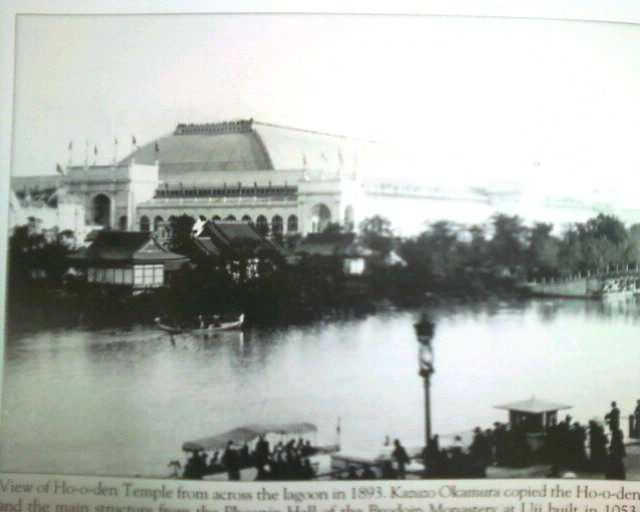
Japanese Pavilion,Byodo-in Temple 平等院鳳凰堂in the
World Colombian Exhibition in 1893.. Its garden is partly
 remaining in Jackson Park near UofC..renamed "Osaka garden"..
as the black children's playing field
Japanese carpenters who built the pavilion

Currently, remaining Japanese North Siders seem to be aging (while young generation now prefer to live or work in the suburbs,) they are on the verge of extinction.

I suppose all the current characteristics of Winthrop Ave and Edgewater has come from these historical consequences.. while I thought the area has strange..integrated flavor of ethnic diversity. (Winthrop Ave, where Hillary's family used to live.. doesn’t have a segregation now: it has just..all kinds of people: almost half whites, 30-40% black, and all the other people...) I noticed there was also, a kind of racial integration movement existed in the Uptown; and current public policy is also reinforcing the integration.. And such an unusual diversity of this area is also, somewhat blended with the remaining atmosphere of the elegant…classic cosmopolitan culture which used to flourish in the old days in this area...

 *halfway house: [also called a “recovery house” or “sober house” is a place to allow people to begin the process of reintegration with society]


the bus can be kneeling

Monday, January 21, 2013

Field notes

From the Walking Tour in Edgewater -  last fall..

 Dynamic Diversity..

This area’s high level of diversity may be similar to Union Sq's in NY...but the entire area is  much larger. - If I walk down the Broadway southward from Sheridan & Broadway, there are some African restaurants..like Ethiopian's, or Assyrian Church. Large Ismailicenter - a Shi'ia mosque.. is on the corner.

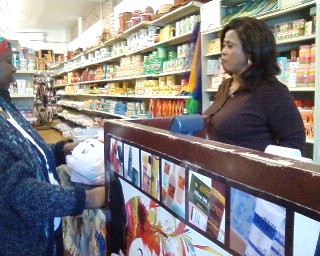
I usually see quite a few African-immigrants here: I found- the female manager at an African grocery is a Nigerian. She has come to US when she was 7..She said - lot of African people also live in this neighborhood, and their nationalities are very diverse..such as. "Liberian, Ethiopian, Ghanaian, Beninese, Senegalese, Sudanese or just from all African countries." 
Although  she doesn’t know why other people came to the US, one of her customer with her at the moment said she came from Liberia with her daughter, escaped from the Liberian war. The female manager said "Nigeria is not in war, but there is a religious war fought between Muslim and Christians now." I also used to know a tiny Internet café, run by the African people.. under the elevated track at Thorndale sta..

I entered the other ethnic groceries around the corner of Granville-Winthrop : one shop is run by a Korean man in his late 50s, who started his shop in 1987. The other grocery shop’s clerk was an Armenian, and bunch of (Near-Eastern looking..?) male customers were inside the shop (They talked in a strange tongue.. The clerk said his customers are “from all over Europe”...)
at a small grocery in Granville
The other grocery shop’s clerk at the same corner looked like South Asian.

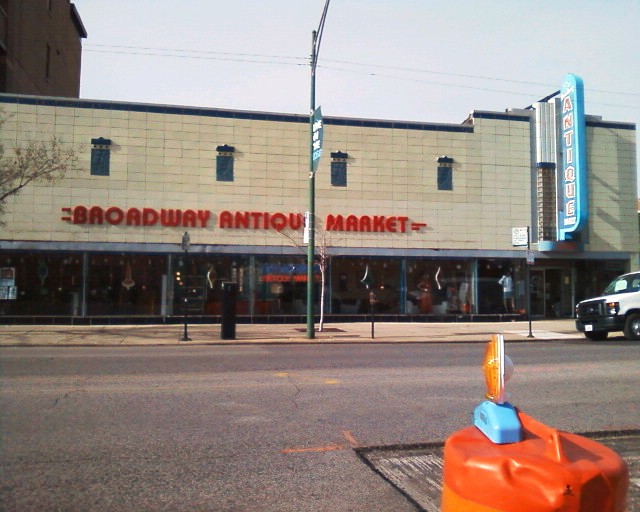
 I returned to the Broadway and also asked about the manager’s nationality at the large antique shop, “Edgewater Antique Mall” on the street- next to the Popeye’s—he said he is a 3rd generation French immigrant, whose grand parents first came from France in early 1900s ..“about 100 years ago,” and started restaurants in Cleveland, OH..He said both of his parents had college degrees and became architects and book-keeper..He moved to Chicago by himself to open his antique shop 10 just years ago.. Attracting Yuppies.

I also visited Foster Ave (the south boundary of Edgewater near Berwin sta,) and Andersonville (near Foster & Clark.). Foster Ave is said to be historical - certain..old “Saddle & Cycle Company” was located here..-  but nobody around here knew such an old name, if I asked.  I asked the shop clerk at the huge Dominick’s Super market at Foster & Sheridan.. about what is conspicuous about Foster Ave—she  said, it is only “known by its high crime rate..there are a lot of robbery”..

.On my way to Andersonville, I found a "Yard Sale"- a couple of elderly white women sitting in front of their house, showing a lot of artifacts from their home. An old woman answered to my casual interview. Although they live on the edge of Andersonville’s Swedish area, she is a German resident who has been living there since her great-grand parents moved into this area in 1960s. Asked about how the neighborhood changed, she said, “Clark Street used to be much more thriving.. There were much more shops and businesses”- Andersonville seems to be comparatively declined..
div style="text-align: right;">
"Andersonville"

She said- there is also a big Korean town with “a lot of Korean businesses” in more south along the Broadway..or more Uptown. (Later I realized.. the “Korean town” which she referred to was about the Chinese-Vietnamese town in Argyle, while.. she said “Koreans” move into the area from 1970s..) She thinks her neighborhood is peaceful, and its crime rate is not especially high but just average..
 In Andersonville, there are some shops apparently Swedish –restaurants, groceries, furniture shops etc— including the Swedish Immigrant Museum (holding a nice exhibition) on Clark St. Also, many other ethnic shops are seen, such as Italian pizza parlor, a big Persian Grocery (selling Turkish coffee and goods, variety of Middle-Eastern foods..,) “Reza” Persian restaurant..since 1983, a stylish vintage clothing and antique shop (which was opened five year ago by Scottish,) etc. The large Irish bar on the corer was opened one year ago by an “European” owner..  Trendy-looking new shops are now mushrooming here ..cafes, eateries, apparel shops, like Akira Chicago...all attracting urban Yuppies apparently coming from other towns and strolling about the Clark St.— the atmosphere is almost like small Wickerpark (like..hip Brooklyn Ave area in New York) although, no counter-culture music/book store is seen. I also saw three Japanese female students from Northwestern Univ.. Old Swedish neighborhood is now, transforming to a multi-cultural, trendy spot..

Edgewater “Home Tour” back  in mid September..

 I joined the “Edgewater Home Tour,” held annually by "Edgewater Historical Society." It started form St. Mary Eritrean Orthodox Church at Paulina & W. Highland. The people joined the tour visited Edgewatera7 several vintage houses... shown by their current owners to the public. They said the Church was built in 1853: its owner has changed from its builder..Swedish Methodists to Romanian orthodox to current Eritreans. Most of these charming old homes (built in early 1900s.. 1908, 1925..etc..) were designed by “Edgewater architects,” such as Andrew Norman. (They mixed Frank Loyd-like Prairie Style... and other styles, etc.) One of the house had relics..stones in the garden.. brought from the old World Colombian Exhibition.

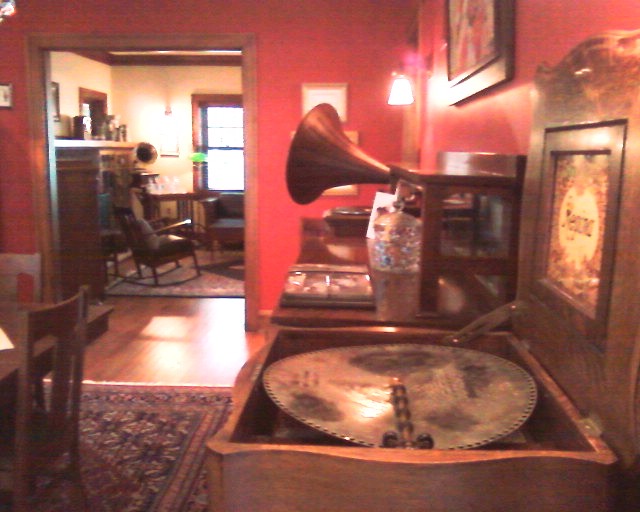
Other than nice architectural details, I was also interested in the homes’ current owners who guided the visitors. One of the houses was owned by couple of female craft designers (cool, fashionable-looking white and black woman, who uses the house as their atelier.) The others who furnished their home with futuristic modern furniture.. were a gay couple. The house next to the church was former property of Mills Company Chicago, (a manufacturer of self playing violin and piano since late 19C to 1920s) – there were amazing collection of old, wooden mechanical music machines (Player Pianos, Nickelodeon Orchestions, Jukeboxes, Phonographs, etc…) still exhibited inside, though its current owners seemed unrelated to the company. Other owners include people of ordinary kind. I was impressed by these owners who looked like yuppie people, who purchased such venerable, elegant houses as they like.


There was somewhat artistic and cultural scent in this area.. It was also detected when I came to this area... I found there was art exhibitions and Spanish guitar concerts in the Starbucks at the corner of Bryn Mawr ave.. held by female African American manager; Café Metropolis near Granville also regularly shows artists’ works in the shop... There are also, many senior  residence facilities  found in Edgewater. A public senior housing is seen at Ardmore- Kenmore, with a nice, hotel-like entrance.

There are some other condos on  Sheridan Rd.. or Broadway-Ardmore, and also, some high-rise condos on the Holywood Beach (Osterman Beach) - supposed to be mostly for the seniors. Former Edgewater Beach Hotel’ s building may be also, mostly lived by them..A big, greyish CHA building is at Devon-Broadway. Number of disabled people came back by bus are incessantly getting into the building, ."they are living here" said the reception woman..


Walgreen's were Swedish immigrants


Akira Chicago.. in Andersonville

Scottish run Antique shop 
wax Swedish immigrant doll
Persian grocery
AKIRA Chicago was started by Chinese designers..although the brand name is the same with my late daddy's name. They have about 20 shops in Chicago.. but they're Chicago only  .(I like their near-future Sci-Fi esque designs..  of course, JP Anime ..inspired..

Nigerian grocery
French-run Broadway Antique Market

Wednesday, January 9, 2013

"Interest Goups" in Illinois are corrupted?

Tammy Duckworth and Joe Walsh


About the Common Myth "interest groups are corrupting influence on politics..."

Sorry ...it is  from my 'poliSci paper'..with little modification!

    When we are understanding the complex world around us, one of the usual, intellectual “shortcut” which we are using.. is called “myth”—Ever since the days of the ancient Greeks who created the mythical stories to make sense of their “universe” or “cosmos...” When we try to understand today's government and the people's political behavior, we are also using  them- myth and stories-...  to make sense of it.
   Lately, the term “interest groups” frequently appears in the media. .. “Apparently, a majority of Americans believe in the myth: interest groups are a corrupting influence in politics, ” because usually, the Americans “suspect interest groups of dishonesty and corrupting the political process by unduly influencing government, most often by ‘buying’ members of Congress through campaign contributions ...”  Such a myth has been existing since the government of America was founded—Meanwhile, the Greeks also promoted the value of logos “as a means of enhancing the knowledge derived from mythos ” …We also need to explore more rational explanation to analyze, if the myth is true or not.

    There are countless lobbyists officially registered in D.C, who represent the vested interest of various groups and individuals. "They are seeking the access to the Congressmen, their staffers and executive branch officials to try to influence their decisions..". While they are categorized as either “Economic Interest Groups,” “Citizen Activist Interest Groups,” “Government Interest Groups,” or “Foreign Nation Interest Groups..” they are not so often, openly reported by the media. Therefore, if I...occasionally would find single line of the media articles which mentions particular interest groups which exist behind some ongoing political issue, it seems impressively standing out for me, because the interest groups are usually inscrutable—and I think we the readers have our rights to know about it.

     For example, they say the "fluid nature of politics" are often, under the control of so-called “Economic Interest Groups” who seek narrow business interest in some specific field (..for example, NRA, or the Chamber of Commerce of each state.) it also reminds me of the complicated interest groups' issue about  Illinois’ “Casino Law” –Lately, the State Governor Pat Quinn has been just opposing the legalization of state-run casino, while Mayor Emanuel is pushing it.  It is also about the competition with other states’ casinos, such as the “group of casino investors in Wisconsin (or Indiana).” The news papers say, “Casino backers” actually, also include such people or organizations as.. “Nii-Jii Entertainment,” and “Menominee Indian tribe .".who tried to bring an Indian-owned casino to Kenosha.." Also, allegedly, there are “corrupt labor union leaders, and their lawyers” backing the bill, because the union workers in Illinois “desperately need jobs” now.

      As a leisure entertainment, casino gambling may not be everyone’s interest, but maybe, it is just for the particular enthusiasts’ interests. Pat Quinn dislikes the casino’s expansion, since he anticipates, “if it is legalized, “mobs will follow (meaning: political corruption and crime syndicate infiltration will follow)” –because “after all, this is Chicago… (reported by Associated Press).” On the other hand, the Mayor Emanuel actually, started to emphasize his intention to utilize casino’s expected profit for building and renovating of “up to 25 public schools in Chicago,” repaving of the streets, renovation of “L” tracks, improvement of city water mains, and so on-- It means the CPS and CTA also join the interest groups behind casino?  Stating this way, he must be trying to distract the oppositions. While Governor Quinn is continuously vetoing the bill, this might be an example that interest groups are kind of creepy, and spurious people.

     Also, another topic about "interest groups.." is found here: a long time controversy was solved in California in  2011, with the passage of the California Dream ACT, signed by new governor Brown..(after the ex-Governor Schwarzenegger’s step down..). Not to mention, it was widely supported by Latino interest groups, such as La Raza (NCLR.) Obama’s White House has been also supporting the idea of Dream ACT  with unusual enthusiasm..and such a policy was strongly related to his re-election campaign. It actually worked, and huge Latino voters turned out to vote for him for the reelection. (Obama gained about 71 percent of the Latino vote nationwide, compared to Mitt Romney's 27 percent.) A columnist says,  “President Obama won reelection essentially by bestowing ‘gifts’ to minority voters, the young and women through his policies and campaign promises”.. “Romney cited …the forgiveness of interests on college loans essentially as bribes that helped put Obama over the top.” –Even Romney is suggesting (or lamenting) the money for these interest groups is given as the political bribes.. As a result, Obama gained overwhelming minority support: more than 70 percent among Hispanic and Asians and 94 percent from fellow black..
    The most significant incident about the Super PAC (which is representative of interest groups) was also found in the latest “nastiest” fight between the former Illinois Congressman Joe Walsh and Tammy Duckworth.. There was barrage of negative campaign ads (created by the super PACs supporting both candidates, who were attacking each other) aired on TV in Chicago, until the Election Day. Everyone complained that these escalation of the ads annoyed them.. Reportedly, the PAC who supported Walsh was “The Now or Never” super PAC (a pro-Tea Party PAC, funded by the conservative Americans for Limited Government...who announced to spend $2.7million for him, although.. later they curbed into $1 million,) and “Freedom Works for America,” who spent $1.7 million for him.(Walsh stood against the “transportation bill,” which was also, against “Now or Never” PAC’s interest)...”  NBC has reported,

“Outside super PACs and national party groups have contributed nearly $6.6 million to the Walsh-Duckworth race. Rep. Joe Walsh […] is getting a bailout from a Super PAC in Kansas City, far outside the 8th Congressional District of Illinois. [Walsh needed such a big money..] because in the last fundraising quarter, Duckworth raised $1.5 million, while Walsh raised only $250,000.”

      His opponent, Duckworth was supported by the super PAC (“born out of cell phone company CREDO Mobile”.)  The group aimed to raise money not only to defeat Walsh, but also, to defeat 9 other Tea Party Republican candidates in other states...) 

      The media often mentioned that Walsh was “bought by the PAC.” These PACs declared that they raise the money, simply because they antagonize with..or just hate their opponents.  It sounds ridiculous..if there is no means to stop this crazily heating, corrupting political race..made by both Duckworth and Walsh. It give me a touch of  monstrous, Orwellian fantasy story.. It turns to be the strong evidence to support the negative myth—which claims “interest groups are corrupt and dirty.” 

        When it comes to the size of the campaign money in the 2012 election, Barack Obama raised $934 million (Candidate + DNC 91%;  Super PAC 7%). Mitt Romney raised $881.8 million (Candidate + RNC 83%; Super PAC 15%) (NYtimes said.)  Our PoliSci textbook is also mentioning the figures: “In 2008,[…] over $35 million was spent on the Minnesota Senate race between Republican incumbent Norm Coleman and Democratic challenger Al Franken,” “In the 2010 California gubernatorial campaign, Republican Meg Whitman spent over $142 million of her own money.” “During the 2010 election cycle, PACs contributed more than $375 million to congressional candidates..Compared to them, the money donated to Walsh and Duckworth may be relatively small, however, it was for the local election. And still, these figures are compatible to the size of budget for the major advertising campaigns for the new big product.

     When they say, there is also “Citizen Activist Interest Groups” who try to represent the public interests,  one of such groups is “IIRON,” who held the civilian protest rally at the downtown earlier this month. “IIRON” is an umbrella organization of some student organizations, joined by some civilian groups. Some students from our school's movement organization also joined them, protesting against the state Senator Dick Durbin’s endorsement for the unreasonable, 2013 budget showdown.(The bill aims to do the drastic budget cut, which would eliminate the budgets for various welfare programs such as education, housing, Medicare, and job-related programs for Illinois’ people. (The amount of budget sequestration planned for the “Department of Human Services,” “Department of Education,” “Department of Labor” of Illinois for fiscal 2013 is $196,965,182 in total, to be cut out from the total $2,544,140,178... spent in 2012.) They declared to cut the budget as the austerity measures in the economic downfall, but simultaneously, they still give the tax cuts to the richest 2%, or the large corporations..
    
  At the site of the protest, I talked to four people at the park at State & Van Buren. I asked them about: who (or.. what kind of “Interest Groups,” if any…) they would think are supposed to exist behind the current...draconian state budget cut.. A middle aged white woman said, she thinks the “Interest Groups” behind must be “Military industry (such as “Halliburton” and “Boeing”)”, “Exxon Mobile,” “General Electrics,” etc. The other white woman named Stephanie, who is around 40 years old and a member of Illinois Single Payers Coalition: opposing the Medicare budget cut.. said, it must be the “insurance companies.”  I also talked to other fellow students from my school—a guy named Zach said, “I think it’s mainly, the banks.” A female student (named Lilly) said, “it must be the big corporations who contributed money to the campaigns of politicians, when they ran for the office.”

   - It might have been somewhat like leading questions, since I actually questioned the people about the “interest groups” at the site of civilian protest; so.. they gave me clear cut answers. However, these ordinary people surely have misgivings about the existence of selfish interest groups who are affecting the state budget policy.  If they can influence the election campaign by money, who can stop the undemocratic legislation? It may only cause “richest is strong” society, and it must be what we are seeing now in America. The Supreme Court’s decision, which allowed PAC sounds inscrutable.

      The other..most obvious issue, concerning the interest groups must be “ACORN controversy.” of some years ago. ACORN (Association of Community Organizations for Reform Now) was the association of community-based organizations, who gave various social welfare services for moderate-income people. (“ACORN was a collection of grass-roots organizations that serve as an advocate for the poor. It began in the 1970s and now has about 1,200 chapters.") They had their chapters in more than 1,200 U.S. neighborhoods, as well as some branches overseas. They also had PAC and supported Jesse Jackson in 1980’s..  Lately, ACORN also cooperated with IRS and US Census Bureau. . However, concerning the allegation of voter registration fraud in 2008 election, they were trapped by two young conservative activists who created fraudulent scandal videos…While I didn’t know the consequence of what happened after then—if I check the web today, I find: this broad, grass-roots..socialistic organization was already, brought into dissolution in 2010..I guess it may illustrates how Barack Obama has already …dexterously used the Internet by himself in 2008 election for raising money for himself, mirroring the formidable, grass-roots voter mobilization organization like ACORN, or the super PACs?
     
         Considering the legitimacy of the interest groups,  the influence of their money’s power should be eliminated—because legitimacy is the most important, center issue of the democracy. If you openly publicize who is behind the public education bill (for example, a white politician doesn’t want to properly allocate the budget to the public schools in low income neighborhood, and if the people see their names in the media, they can oppose.)  The public can check if the interest groups are with genuine legitimacy, regardless of the group’s financial strength or size. But it must be physically impossible…if everybody needs to check every bill submitted - like civilian surveillance-  unless the people of entire society would become “congress members”?

    Naturally, .if someone with limited “legitimacy” behaves “beyond one’s legitimacy” enhanced by money, and if another countervailing force behaves against the former, also with the enhanced power of their money,  the society is supposed to be put in mess.. It wouldn’t be a harmonized society anymore.  (Even if they importance on the value of “freedom of individuals” as American creed—logically, it is already, morally and economically failing..) As the bottom line, the negative “myth” of the interested group is credible. Even if the political world indispensably needs the lobbyist activities for practical convenience,  it is almost all about the chase of power and undemocratic money..simply in a  frantic manner.